
The media as an educational outlet
YSSA intends to spread awareness of youth suicide by emphasizing the various methodologies that can potentially mitigate this crisis. Specifically, our team intends to underscore the effects of media and how the general idea of suicide on platforms can be flipped into a positive reinforcement. With the exponential growth of the media since the 1920s, this methodology is highly sensitive and can do reversible damage to the original intention. The media can either enhance the effects of suicide or weaken them serving as a powerful tool to alleviate the effects of suicidal behaviors. However, following media reports of suicide, vulnerable people—such as those who have a history of failed suicide attempts—are more likely to imitate these unhealthy behaviors. This is especially true if the exposure is explicit and provides sensory details. The effects of these indirect methods can lead to an unintentional rise in suicidal behaviors amongst the vast media audience.
The intended audience for this intervention includes individuals with access to technology, specifically smartphones, who are influenced by media reporting and seek solutions through digital means. This group often comprises vulnerable individuals who heavily rely on the internet for information. Conversely, those who do not lean towards SPI are individuals without steady access to electronics and those who adhere to conventional methods and societal standards.
-
Raising Awareness and Reducing Stigma: Responsible media coverage can help raise awareness about mental health issues and suicide, contributing to destigmatization. This is crucial as stigma often prevents individuals from seeking help, and open discussions can foster a more supportive environment.
Promoting Help-Seeking Behavior: By sharing information about the signs of suicidal thoughts and behaviors, as well as available resources and treatments, media reports can encourage individuals in distress to seek help. Including information about crisis helplines and mental health services is particularly valuable.
Enhancing Mental Health Literacy: Media coverage can educate the public on the complexities of mental health, helping people understand the multifaceted causes of suicide, such as mental illness, trauma, and social factors. This can lead to a more informed and empathetic public discourse.
Highlighting Stories of Recovery and Resilience: Media stories that focus on individuals who have overcome suicidal thoughts and found effective coping strategies can provide hope and inspiration. These stories can serve as powerful testimonials that recovery is possible, offering a counter-narrative to despair.
Providing Resources and Support Information: When media include links to suicide prevention resources, such as the 988 Crisis Lifeline or local mental health services, they provide immediate, actionable support for those in need.
Creating a Platform for Experts and Advocates: Media can amplify the voices of mental health professionals, advocates, and individuals with lived experiences, providing valuable insights and expert advice to the public.
-
Method Specification: Detailed descriptions of the methods used in suicide, especially when prominently reported, can lead to imitation or "copycat" suicides. The likelihood of this effect increases when the method is novel or highly lethal.
Dramatic and Prominent Reporting: Sensationalist reporting, including large headlines or photographs of the deceased, can glamorize the act and make it appear more appealing or accessible, particularly to vulnerable individuals.
Celebrity Suicides: The suicide of a well-known figure can have a particularly strong influence, potentially leading to an increase in suicides among fans or those who identify with the celebrity.
Vulnerability of Younger Individuals: Younger people are more susceptible to the influence of media portrayals of suicide, possibly due to factors like impressionability, identification with peers, and the search for identity and meaning.
Oversimplification of Causes: Media reports often oversimplify the reasons behind suicide, attributing it to singular causes like financial problems, relationship issues, or academic failure, while neglecting underlying mental health conditions, which are the most common contributing factors.Increased Accessibility to Suicide Methods: Reports that provide specific details about the means of suicide can inadvertently educate individuals about how to carry out such acts, thereby increasing the risk of suicide attempts.
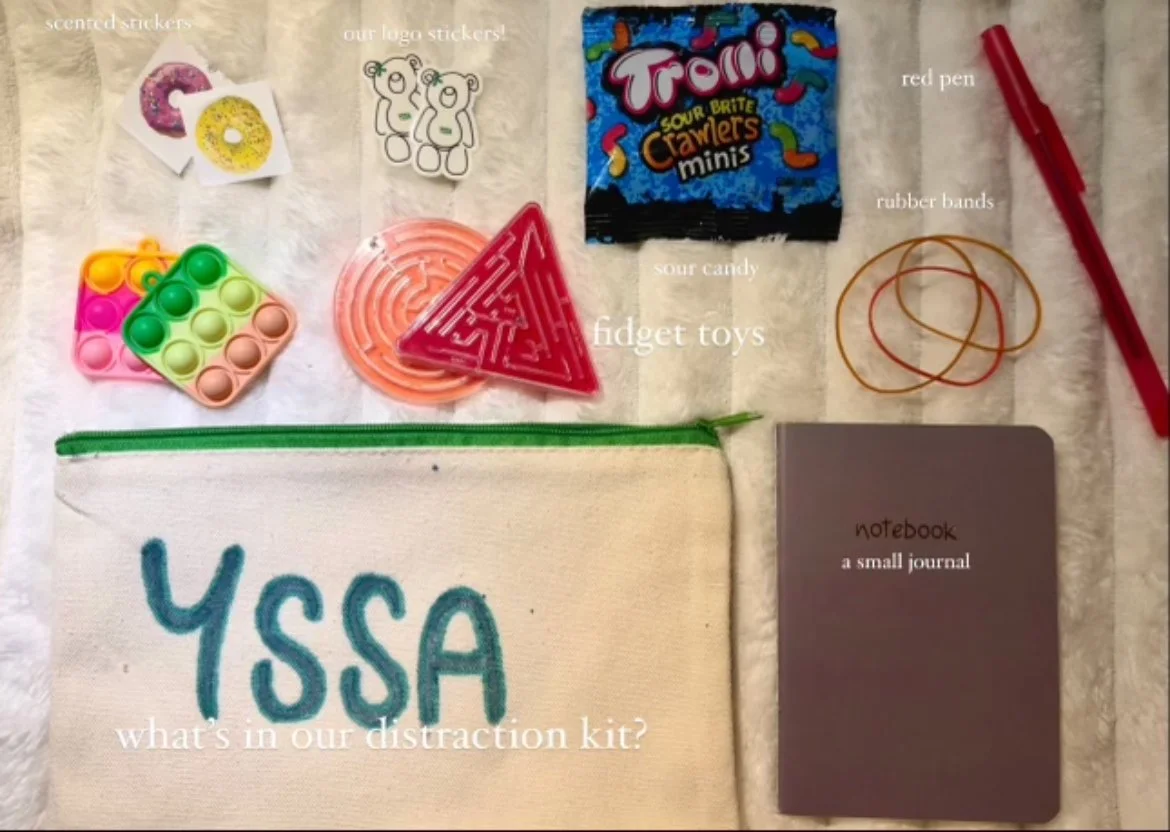
Distraction Kit
YSSA focuses on bringing alertness to the uprising numbers of cases of suicide among youths by informing different methods of coping strategies. This specific intervention focuses on the use of physical toys and objects to relieve any anxiety or self-harm behaviors. Putting multiple commonly used coping items together, a distraction kit will contain various ways to distract someone from extreme points of anxiety, depression, or any other mental illness that may lead to an incline of suicidal ideations. Importantly, these methods are not intended to be a cure for that mental illness as these are simple ways to bring a person out of an episode that might result in self-injury. With the hope that people will use this kit during a panic attack, depressive episode, or anything that causes a person to start losing cognitive function, this kit will be a method of preventing extreme decisions.
According to a study, approximately 8% of the adolescents involved in the study committed to some kind of NSSI (Nonsuicidal Self-Injury) and stated that the known rates of nonsuicidal self-injury are between ∼7% and 24% in samples of early adolescents and older adolescents, implying that there are much more cases. Additionally, data from the recently released Teen National Health Interview Survey from July 2021 to December 2022, reveals that 21% of adolescents ages 12-17 report experiencing symptoms of anxiety in the past two weeks, and 17% said they had symptoms of depression. This kit reveals positive coping mechanisms and resources that will help with the immediate need for help for these mental health illnesses.
-
The chewing of a food, the sourness of the candy, and the texture of the food may distract a person out of an episode or shortly relax the sudden uprising of thoughts.
-
To prevent the use of a blade for self-harm, an alternative may be to use a red pen to mark the places where they may be inclined to harm. Having an alternative like this may incline an individual from resourcing to other ways of mediating suicidal behaviors.
-
The scribble sense of touch may bring a person into an attentive state, stopping themselves from the overwhelming thoughts.
-
Some people find that moving, spinning, or handling an object can help soothe or calm them. For mental illnesses such as anxiety, OCD, ADHD, autism, and to any person who finds that the constant moving stops them from episodes. Ex: squeezable stress balls, fidget spinners, playdough or putty, chewable pendants or straws, sensory diffusers, six-sided fidget cubes
-
Smell therapy could help people with depression avoid overthinking, she said. Additionally, research has also shown that people with depression are more likely to have a reduced sense of smell (known as olfactory loss), and that depression symptoms tend to get worse the more people's sense of smell diminishes. Additionally, scents have a severe impact on bringing up memories from the time where that scent was familiarized with the individual. The smell of scented stickers from their childhood may bring positive memories.
-
The flicking of a rubber band on a person’s wrist is one of the common ways that people avoid self-harm. Furthermore, the fidgeting action with the rubber band may distract a person from any ideations or thoughts depending on their mental illness.
-
Like scented stickers, the scent of lavender may help with overthinking. Additionally, A small 2019 study found that inhaling lavender oil reduced blood pressure levels in people with preoperative dental anxiety. Research in a 2019 review suggests that inhalation and oral administration of lavender oil may help relieve anxiety. People can hold the oil under the nose and inhale gently or dab some onto a handkerchief to smell. If someone dislikes the scent of lavender, they could try replacing it with another essential oil, such as bergamot orange, chamomile, or lemon.

5-4-3-2-1 Method
YSSA is an organization that puts its mission goal and attention towards the high and constantly rising rates of suicide among teenagers caused by mental illnesses. Among these people in the United States who suffer from suicidal ideations, over 70% have an anxiety disorder according to a study. With the efforts of helping these people, a grounding technique will be introduced within our organization. YSSA will promote the famously known 5-4-3-2-1 grounding technique. Although this technique is famous to those who are familiar with different mental illnesses, it might be new to many of the teenagers who are struggling at the moment.
The 54321 grounding method is a mindfulness exercise that uses the five senses—taste, smell, hearing, sight, and touch—to help manage stress, anxiety, and overwhelming emotions. By focusing on the present moment, interrupts tense or racing thoughts, aiding in regaining composure and control. This technique effectively brings a person back from spiraling thoughts and emotions to the “here and now” alleviating panic attacks.
-
The colors and shapes of objects around you, like a red book, a blue chair, or a green plant.
The patterns on the carpet or wallpaper.
The movement of people or animals nearby.
The light coming through a window.
A picture or painting on the wall.
-
The texture of the fabric on your clothing or furniture.
The coolness or warmth of the surface you're sitting or standing on.
The feeling of a soft blanket or a rough piece of paper.
The sensation of your feet against the ground or the floor.
-
The hum of a refrigerator or air conditioner.
The clicking of a keyboard or the sound of typing.
The whirring of a fan or the noise of an elevator.
-
The aroma of freshly brewed coffee or tea.
The scent of a candle, essential oil, or air freshener.
The smell of a meal cooking or baked goods.
The fragrance of flowers or plants nearby.
-
The taste of a piece of fruit, like an apple or orange.
The flavor of a sip of water or a drink.
The taste of a piece of chocolate or candy.
The flavor of a meal or snack you're currently eating.